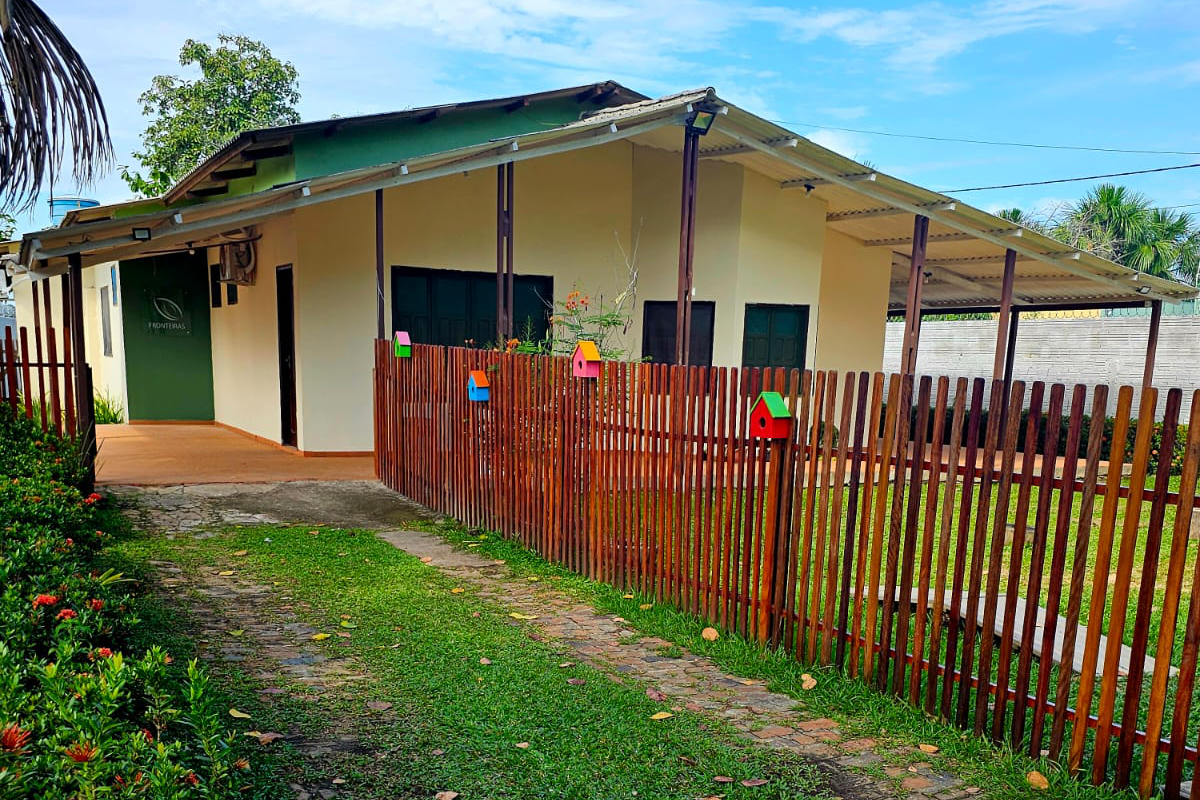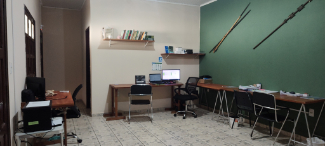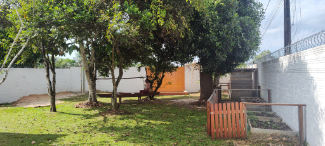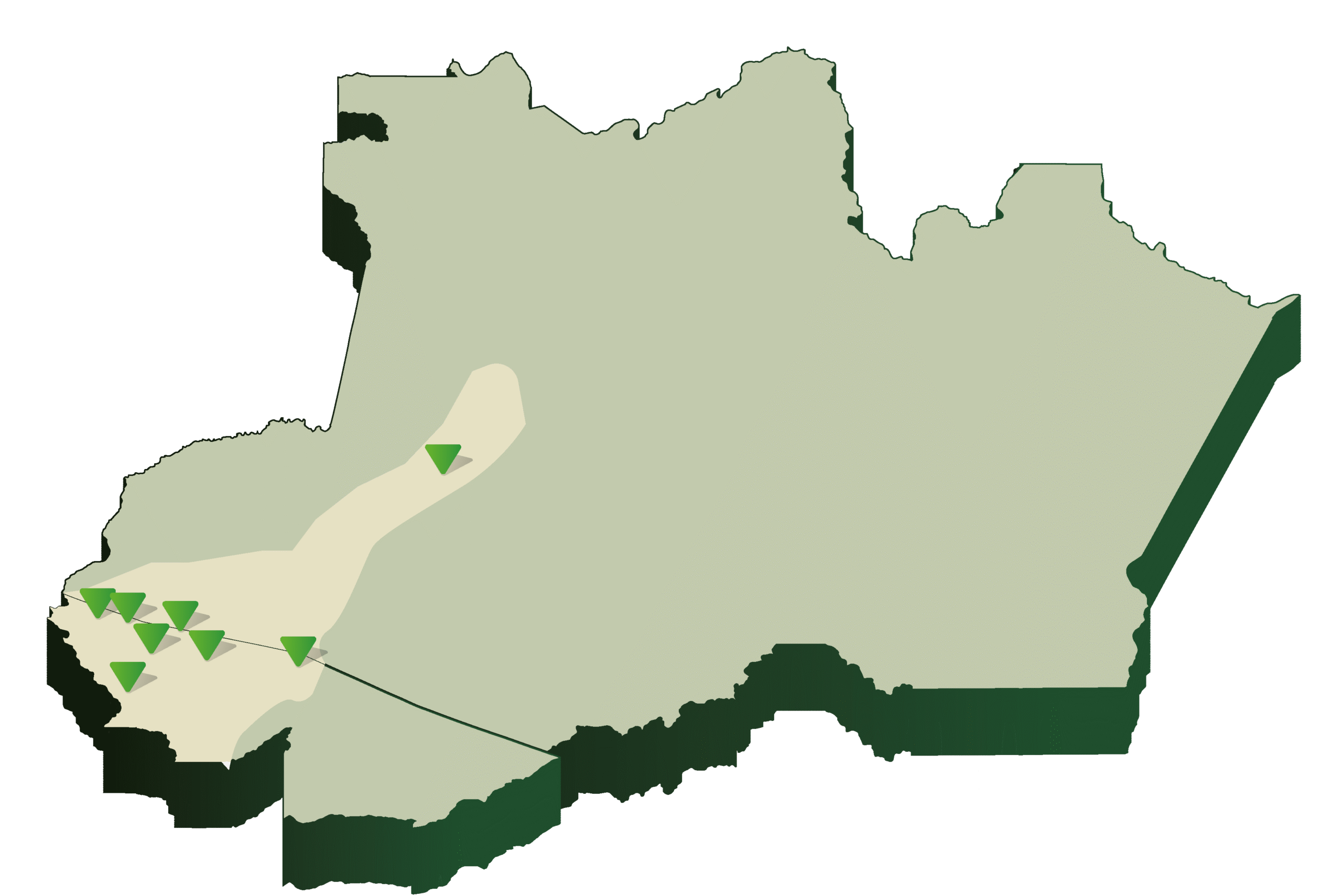
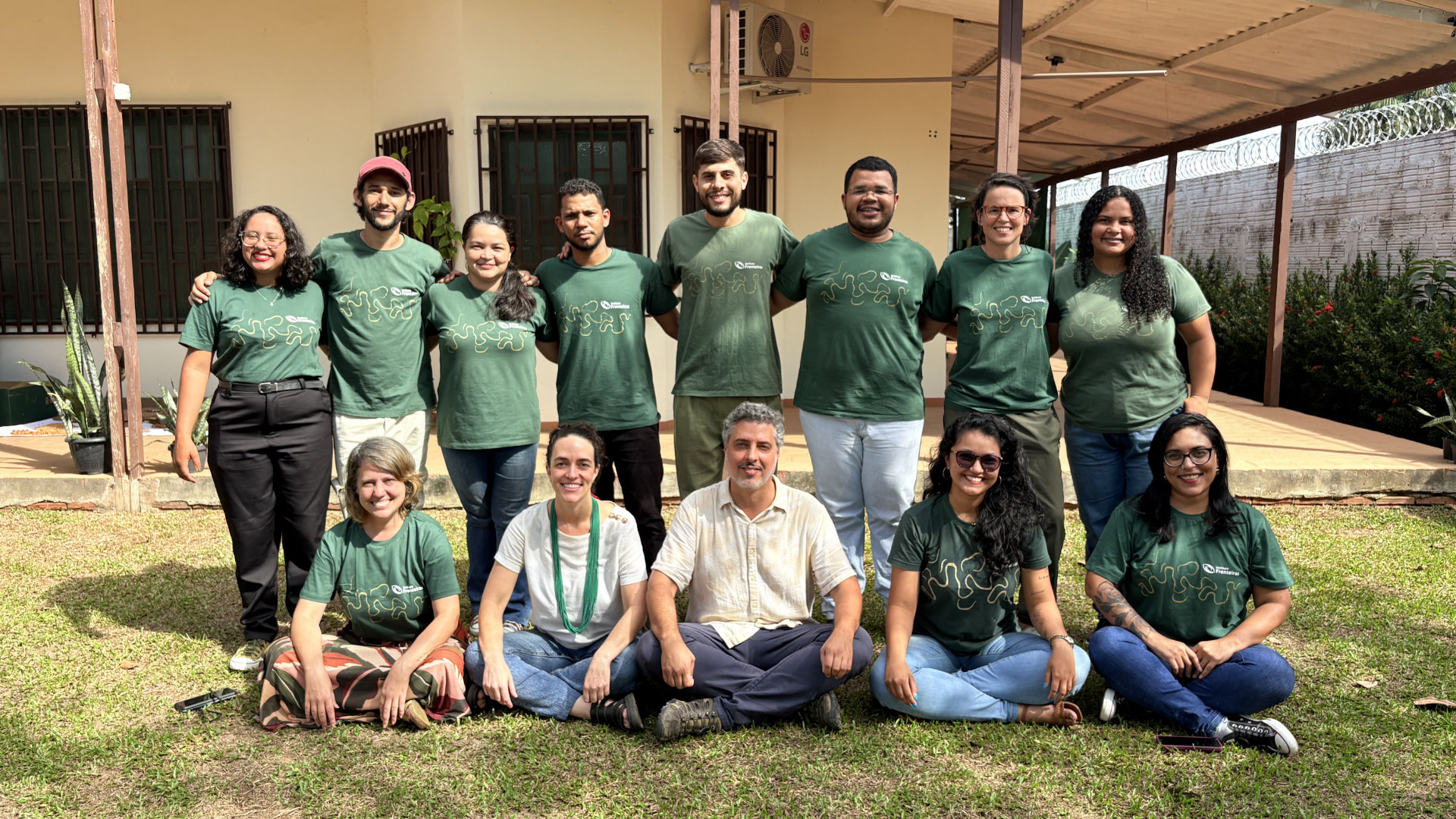
The Fronteiras Institute operates inter-institutional cooperation networks creating collective solutions in the Juruá Valley.
We promote relevant local changes, reversing destructive behaviors towards nature, regenerating ecosystems and their communities and strengthening transformed trajectories aiming at a sustainable future.
Our name comes from our focus on the frontiers that are formed here and now, a unique context in which we find ourselves. Here, in one of the main centers of cultural and biological diversity in the world. And now, in a time of climate and environmental crisis that threatens all forms of life on Earth.
Starting from the previous experience of its founders, Instituto Fronteiras was born as a civil society organization based in Juruá in 2017, as a result of the complexification of research and extension initiatives linked to the Federal University of Acre, Floresta Campus, as it established partnership relations with indigenous peoples and traditional communities in the Juruá Valley around their challenges in managing their territories and community organizations.
We network with local communities committed to the standing forest, favoring projects aimed at development from a socio-economic and environmental point of view, exploiting synergies between private and public institutions, including community associations, NGOs, foundations, universities and companies. In the search for solutions to the complex problem of our borders, we promote the creation of training within cooperation networks, the promotion of new social technologies to increase human and social capital, socio-environmental and gender equity and the sustainable use of natural resources in the territories.

Focuses on: fisheries management, artisanal fishing, governance of common-pool resources, and the management of community-based organizations
Focuses on: organizational management, process facilitation, and applied research
Founder and creator Focus areas: Institutional coordination, socio-environmental governance, and capacity building within the Amazonian context
Focuses on: artisanal fisheries management and governance of common-pool resources
Focuses on: project management, regenerative practices, ecological restoration, and the implementation of agroforestry systems

Focuses on: organizational management, structuring of administrative processes, and adaptive co-management
Founder and creator Focuses on: institutional coordination and organizational development
Focuses on: organizational management, community engagement, process facilitation, and applied research
Focuses on: regenerative practices and institutional support
Focuses on: graphic design, storytelling, and communications consulting
Focuses on: managing teams and conducting processes in the field
Focuses on: artisanal fisheries management and governance of common-pool resources
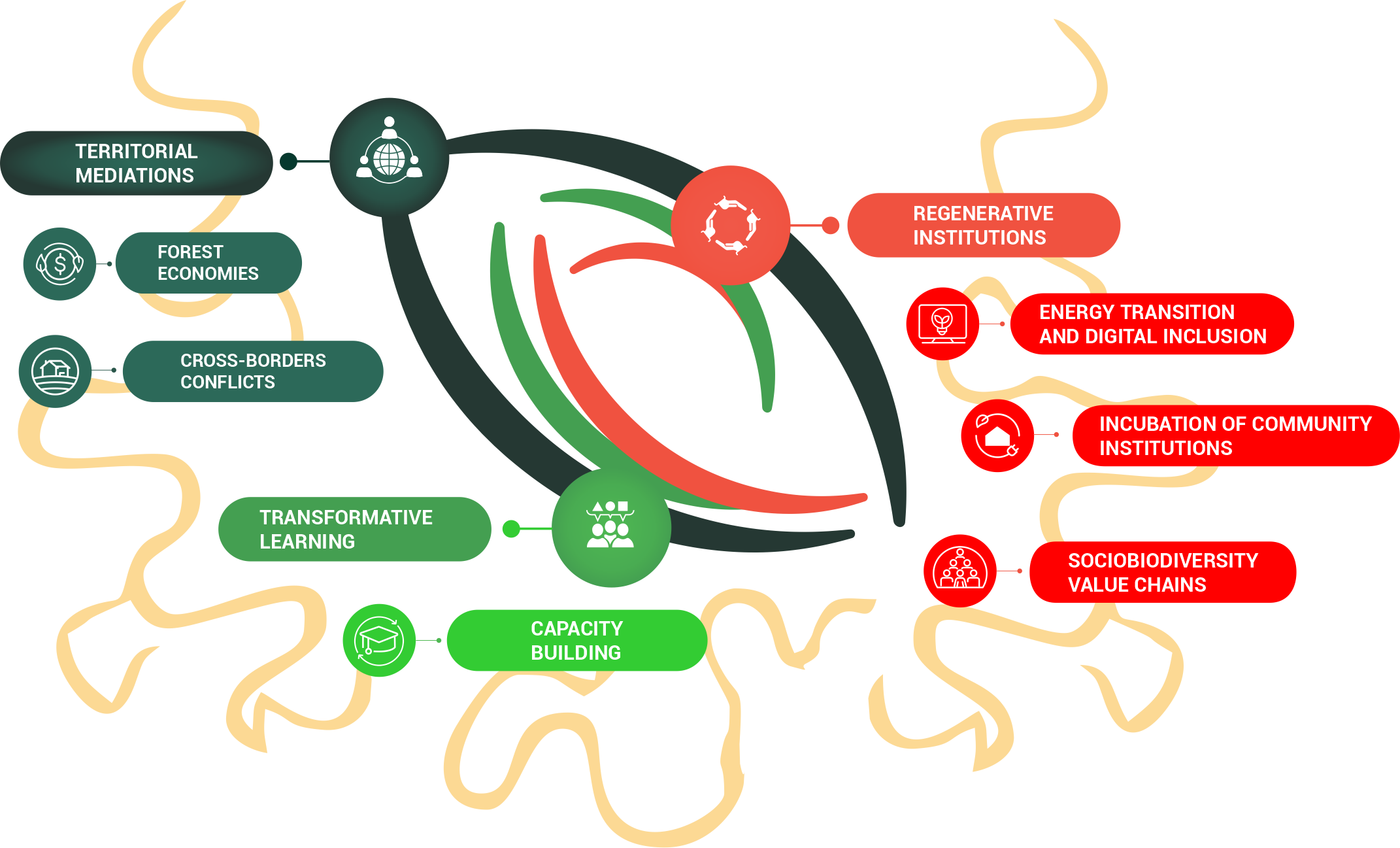
In this area, we support communities and peoples in the collective development of responses to land conflicts.
Our work combines legal counsel, technical support, and inter-institutional coordination to address land regularization, the defense of collective rights, and territorial organization.
We intervene in cases involving deforestation, illegal burning, land grabbing, and the development of unauthorized infrastructure, aiming to restore territorial governance and create the conditions for fairer and more sustainable socioeconomic and environmental relations.
Working through networks to create and strengthen institutional arrangements that keep the forest standing and expand the economic and political autonomy of communities.
This entails enhancing the management of associations, structuring sustainable value chains, facilitating access to public policies, and building economic models that are meaningful to those who live in—and off—the territory.
We seek to support pathways that consolidate long-term, viable solutions.
Transformative knowledge does not come from the outside—it already resides within the stories, practices, and memories of those who inhabit a territory. That is why we do not “teach”; rather, we co-produce. We create spaces where individual knowledge meets collective wisdom—an encounter that sparks awareness, informs decision-making, and drives action.
Our goal is for every community to develop its own interpretation of the world, and with it, the capacity to transform that world—to make strategic decisions, plan for the future, and lead the changes they desire, with a sense of agency and lasting autonomy.